 English
 русский
Material Science · Packaging Craft
What Raw Materials Are Kraft Paper Tape and Masking Tape Each Made From?
A closer look at pulp, adhesive chemistry, and the quiet engineering decisions that separate two everyday tapes — one built to seal for good, the other designed to disappear cleanly.
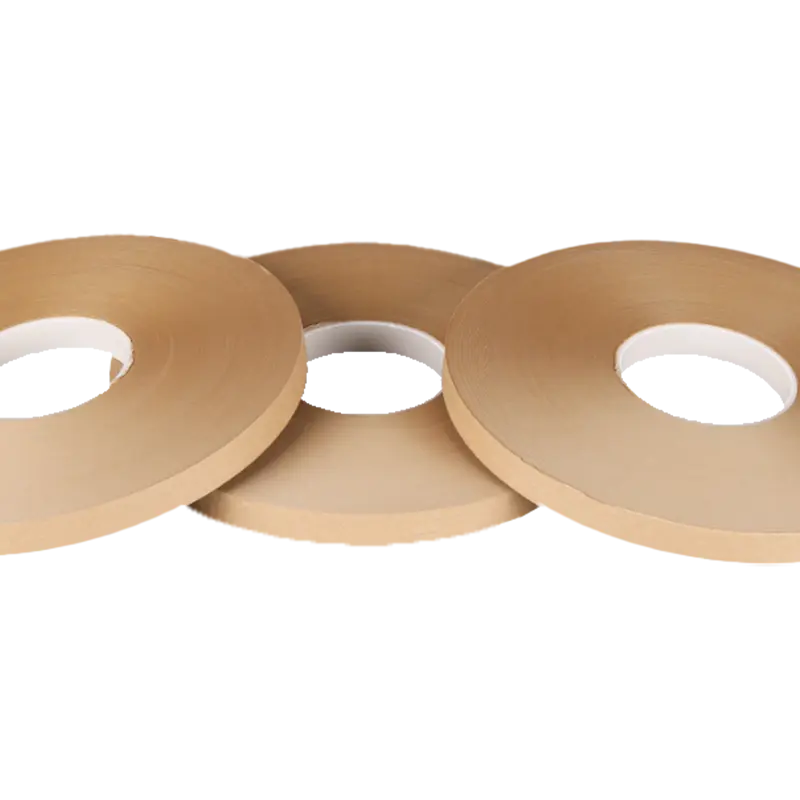
Kraft paper tape is made from a kraft paper backing coated with either a water-activated starch-based adhesive or a pressure-sensitive acrylic/rubber adhesive, while masking tape is made from a thinner, crepe-textured paper backing coated with a pressure-sensitive rubber or synthetic rubber adhesive. Both products begin as wood-pulp paper, yet the pulp processing, paper thickness, texture, and adhesive chemistry diverge sharply — which is exactly why the two tapes feel, hold, and release so differently once applied.
Understanding these raw material differences matters, because it directly shapes strength, flexibility, temperature resistance, and removability. Someone sourcing tape for kraft paper packaging needs a very different material profile than someone reaching for a temporary, clean-release tape along a freshly painted edge. What follows is a material-level breakdown — grounded in production data and side-by-side comparison — to help match the right tape to the right task.
The Paper Backing: Kraft Pulp vs Crepe Paper
Kraft Paper Tape Backing
The backing of kraft paper tape is produced from unbleached or lightly bleached softwood kraft pulp, made using the sulfate pulping process. This process removes lignin from wood chips using a chemical cooking liquor, leaving behind long, strong cellulose fibers. The resulting paper typically weighs 60 to 70 grams per square meter (gsm) — noticeably heavier and denser than most other paper-based tapes. This density gives kraft paper tape its signature tan-brown color and high tensile strength, making it the standard choice as tape for kraft paper cartons and heavy shipping boxes.
Masking Tape Backing
Masking tape uses a much lighter paper, typically ranging from 25 to 45 gsm, run through a creping process during manufacturing. Creping mechanically compresses the fibers into a wrinkled, accordion-like texture, giving masking tape its flexibility and ability to conform around curves, corners, and irregular edges. This same creped structure is what allows it to be torn cleanly by hand, with no scissors required.
The paper's texture is not a cosmetic detail — it is the mechanism that decides whether a tape conforms to a curve or holds a straight, rigid seal.
Adhesive Systems: What Actually Sticks the Tape Down
The adhesive layer is where kraft paper tape and masking tape diverge the most — and it is the single biggest factor separating the two products in real-world use.
Water-Activated Starch Adhesive
Traditional kraft paper tape, often called gummed paper tape, uses a starch- or dextrin-based adhesive that stays dry until moistened. Once water is applied, the starch molecules absorb moisture and turn tacky, then form a strong molecular bond as the tape's paper fibers interlock with the fibers of the cardboard surface. This bond is often stronger than the box material itself — a key reason this style of kraft paper tape remains favored in high-volume packaging.
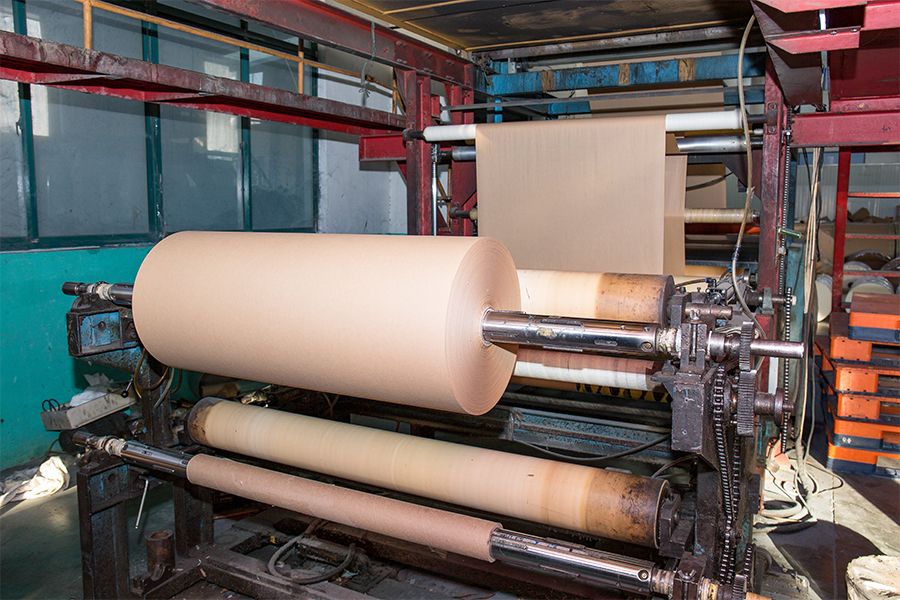
Kraft Paper Tape
Pressure-Sensitive Adhesives
Modern kraft paper tape variants, along with virtually all masking tape, rely on pressure-sensitive adhesives (PSAs) that bond on contact — no water or heat needed. These are generally formulated from one of the following:
- Natural rubber adhesive, valued for strong initial tack and flexibility
- Synthetic rubber adhesive, offering more consistent aging and lower cost
- Acrylic adhesive, prized for UV resistance and clean removal over time
Masking tape almost always relies on a rubber-based adhesive deliberately formulated for lower tack strength than packaging tapes, allowing removal without damaging paint, wood, or glass. This is achieved by adjusting the ratio of tackifying resin to rubber polymer during manufacturing.
Side-by-Side Material Comparison
The table below summarizes the core raw material differences between the two tape types.
| Material Component | Kraft Paper Tape | Masking Tape |
|---|---|---|
| Backing Material | Unbleached kraft pulp paper | Creped light paper |
| Typical Basis Weight | 60–70 gsm | 25–45 gsm |
| Primary Adhesive | Starch or rubber-based | Natural or synthetic rubber |
| Activation Method | Water or pressure | Pressure only |
| Reinforcement Option | Fiberglass strands often added | Rarely reinforced |
Reinforcement Fibers and Additives
Some kraft paper tape products include a layer of woven or scrim fiberglass filaments embedded between the paper and the adhesive. This reinforcement can raise tensile strength significantly, suiting the tape to heavier or irregularly shaped packages. Reinforced kraft paper tape is the common choice wherever a plain paper tape might otherwise stretch or tear under load.
Masking tape, by contrast, is almost never reinforced with fiberglass, since its intended use rarely calls for high tensile strength. Manufacturers instead focus on additives such as plasticizers and anti-aging agents within the paper coating, helping the tape resist becoming brittle when left exposed to sunlight or heat over a multi-day painting project.
Fiberglass reinforcement is a visual and tactile clue — reinforced kraft tape often has a slightly ridged surface and noticeably higher resistance when pulled by hand.
Coatings and Surface Treatments
Saturation and Sizing on Kraft Paper Tape
Before the adhesive is applied, kraft paper used in tape production often undergoes a saturation or sizing process, where the paper is impregnated with a resin solution. This reduces the paper's tendency to absorb moisture unevenly and improves resistance to tearing along the tape's length. Saturated kraft paper also holds ink well, which explains why so much branded, printed tape for kraft paper cartons is available for businesses that want their packaging to double as a marketing surface.
Release Coating on Masking Tape
Masking tape typically receives a thin release coating on the reverse side of the paper, opposite the adhesive layer. This coating, often silicone-based, lets the tape unwind smoothly from the roll without the adhesive clinging to the layer above it. Without it, rolls would jam or tear during unwinding — defeating the purpose of a fast, hand-tearable product.
How Raw Materials Translate to Real-World Performance
The choice of raw materials is never arbitrary; each component is engineered toward a specific function. Industry testing commonly shows that water-activated kraft paper tape can achieve a bond strength exceeding 300 Newtons per 25mm width once fully cured, because the starch adhesive physically fuses with the corrugated cardboard fibers rather than simply resting on the surface. Pressure-sensitive masking tape, by comparison, typically registers a much lower peel adhesion value — often 3 to 6 Newtons per 25mm — intentionally so, allowing the tape to be removed cleanly days later without pulling up paint or leaving fibrous residue.
Temperature tolerance is another area shaped directly by raw material choice. Acrylic-based adhesives, sometimes used in premium kraft paper tape, maintain their bond from below freezing up to roughly 150°F, while standard rubber-based masking tape adhesives can soften and leave residue above roughly 200°F, or turn brittle in freezing conditions.
Standard rubber-adhesive masking tape left in direct sun or high heat for extended periods can leave adhesive residue behind — acrylic-based versions are the safer choice for long exposure jobs.
Environmental and Recyclability Considerations
Because both tapes start with a paper backing, they share some environmental advantages over plastic tapes. The adhesive type, however, affects how easily each tape can be recycled alongside cardboard packaging.
- Starch-based kraft paper tape is generally compatible with standard cardboard recycling streams, since the adhesive itself is biodegradable and paper-based.
- Rubber or acrylic pressure-sensitive adhesives used in reinforced kraft paper tape and in masking tape can sometimes interfere with recycling pulping processes, depending on the facility.
- Masking tape is rarely recycled in practice, as it is typically used in small strips mixed with paint residue, making separation impractical.
Water-activated kraft paper tape remains one of the more environmentally favorable options on the market today, owing to its simple, plant-derived raw material composition.
Choosing the Right Tape Based on Raw Materials
When selecting between these two products, it helps to think in terms of the job the raw materials were designed for. If the task involves permanently sealing boxes for shipping, storage, or moving, the denser paper and stronger adhesive systems found in kraft paper tape are the appropriate match. If the task involves temporary masking during painting, labeling, or light craft work — where clean removal matters more than long-term hold — the thinner creped paper and low-tack rubber adhesive of masking tape are the better fit.
Using standard masking tape as a substitute for structural box-sealing tape — its low peel strength is not engineered to hold weight or survive transit stress.
In Summary
While both products begin with wood-pulp paper as a shared foundation, everything from fiber processing to adhesive chemistry is tailored toward opposite goals: permanence and strength for kraft paper tape, versus temporary hold and clean release for masking tape. Recognizing these material distinctions makes it far easier to select the correct tape for kraft paper packaging needs, or the right general-purpose masking tape for the task at hand — without paying for the wrong material twice.