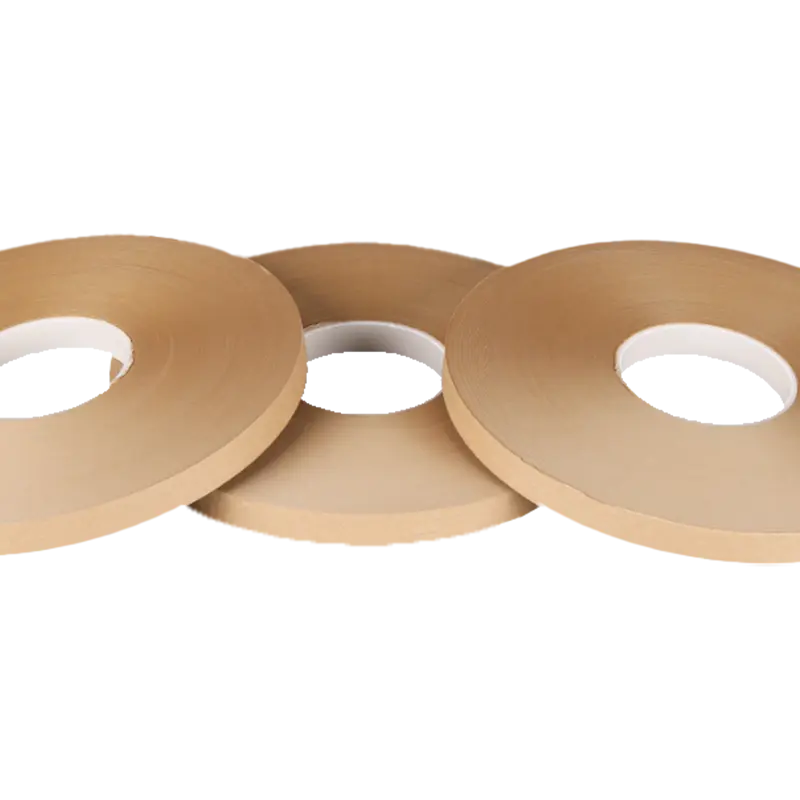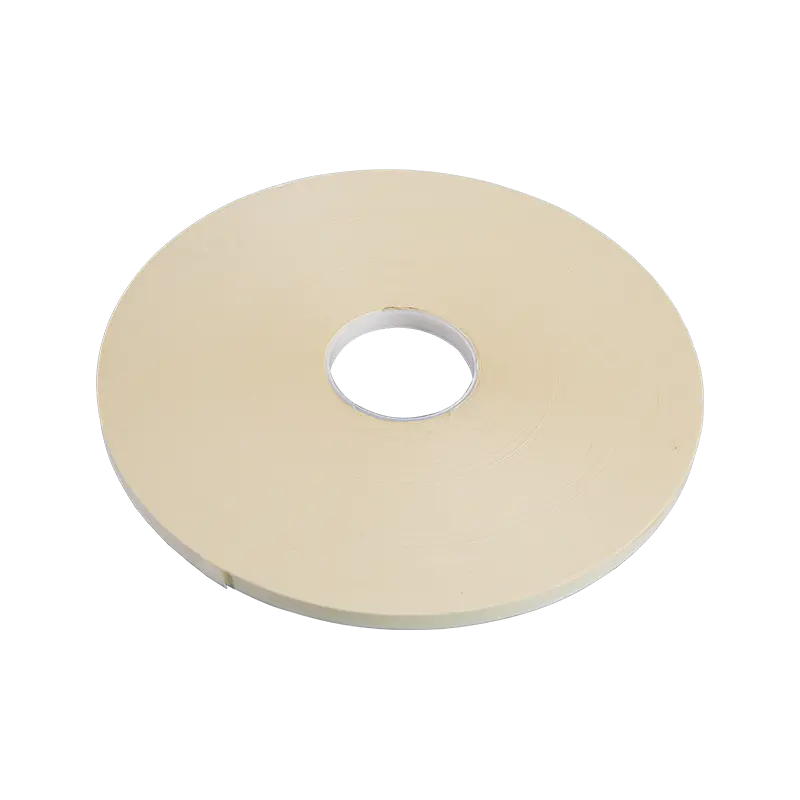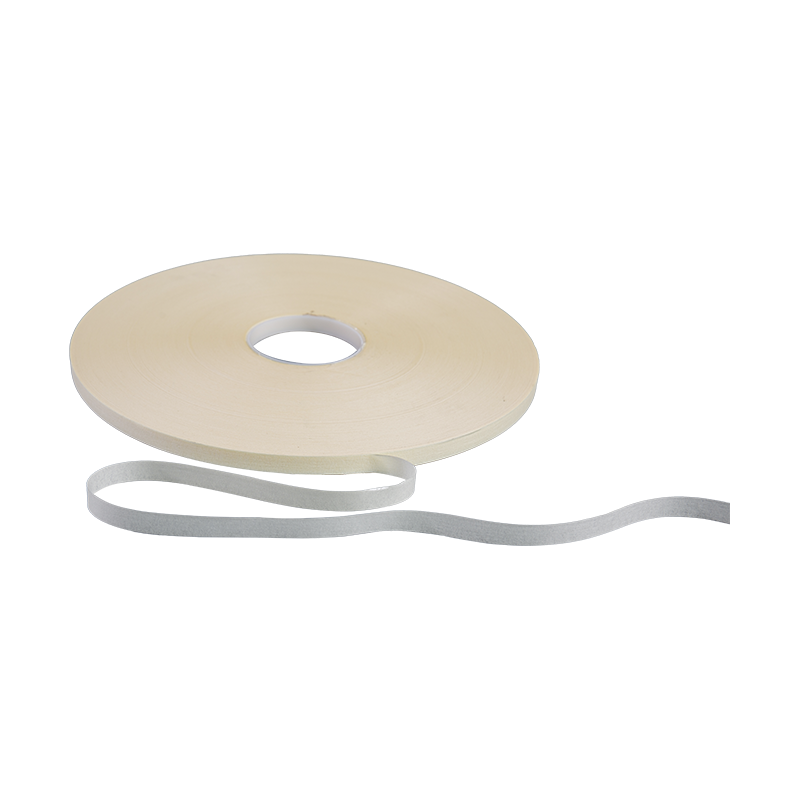
Heat resistant PI tape fully supports both die-cutting and precision slitting, making it one of the most versatile masking and insulation materials available for fine-pitch component applications. Manufacturers routinely convert heat resistant PI tape into custom widths as narrow as 0.5 mm, with dimensional tolerances as tight as ±0.1 mm, depending on the slitting equipment and tape construction used. This capability is central to its adoption in SMT masking, flex circuit manufacturing, transformer coil winding, and semiconductor packaging — all of which demand exact geometry and repeatable adhesion performance under thermal stress.
The physical and chemical properties of heat resistant PI tape are inherently well-suited to precision converting operations. The polyimide (PI) film base — most commonly Kapton® or equivalent — is dimensionally stable, non-brittle, and resistant to tearing under blade pressure. These characteristics prevent edge fraying and micro-cracking that are common failure modes when slitting softer polymer tapes.
Key material attributes that support precision converting include:
Precision slitting of heat resistant PI tape is typically carried out using razor slitting or shear slitting methods. The choice of method affects the minimum achievable width and edge quality. Razor slitting is preferred for narrow widths below 3 mm, while shear slitting offers better productivity for wider rolls and thicker constructions.
| Slitting Method | Minimum Width | Typical Tolerance | Best For |
|---|---|---|---|
| Razor Slitting | 0.5 mm | ±0.1 mm | Ultra-narrow strips, fine-pitch masking |
| Shear Slitting | 3 mm | ±0.2 mm | Medium widths, high-volume production |
| Score Slitting | 5 mm | ±0.3 mm | Wider tapes, less critical applications |
For most fine-pitch PCB masking applications — such as protecting gold fingers, connector pads, or component keep-out zones during wave soldering — slit widths between 1 mm and 6 mm are most commonly specified. These are well within standard production capabilities for any qualified PI tape converter.
Beyond linear slitting, heat resistant PI tape is widely die-cut into custom shapes for use in applications where rectangular strips are insufficient. Die-cutting allows the production of gaskets, labels, pads, frames, and complex geometric profiles that conform exactly to component footprints or PCB layouts.
Flatbed die-cutting and rotary die-cutting are both used, with flatbed tooling offering tighter tolerances — typically ±0.05 mm to ±0.15 mm — and being preferred for complex shapes or small features. Rotary die-cutting is faster and better suited to high-volume, simpler-shaped parts. Steel rule dies and solid machined dies are both compatible with PI tape construction, though sharp, hardened steel blades are essential to achieve clean edges without adhesive smearing.
Fine-pitch component masking is one of the most demanding converting applications for any adhesive tape. Pitches of 0.4 mm to 0.8 mm between pads require masking strips that are dimensionally precise, adhesive-stable at reflow temperatures, and capable of clean removal without leaving residue that could cause soldering defects or affect electrical performance.
Heat resistant PI tape addresses these requirements in the following ways:
Not all heat resistant PI tape products deliver the same converting performance. Several variables directly impact edge quality, dimensional accuracy, and adhesive behavior during cutting:
When ordering slit or die-cut heat resistant PI tape for fine-pitch applications, users should confirm the following parameters directly with the tape manufacturer or converter to ensure the finished product meets application requirements:
Providing a sample board or component drawing to the converter at the specification stage significantly reduces the risk of dimensional mismatch and accelerates prototype approval. Leading PI tape suppliers can typically turn around slit samples within 3 to 5 business days and die-cut samples within 5 to 10 business days, depending on tooling availability.

Copyright © Wuxi Wanfeng Protective Film Co., Ltd. All Rights Reserved.
 English
 русский