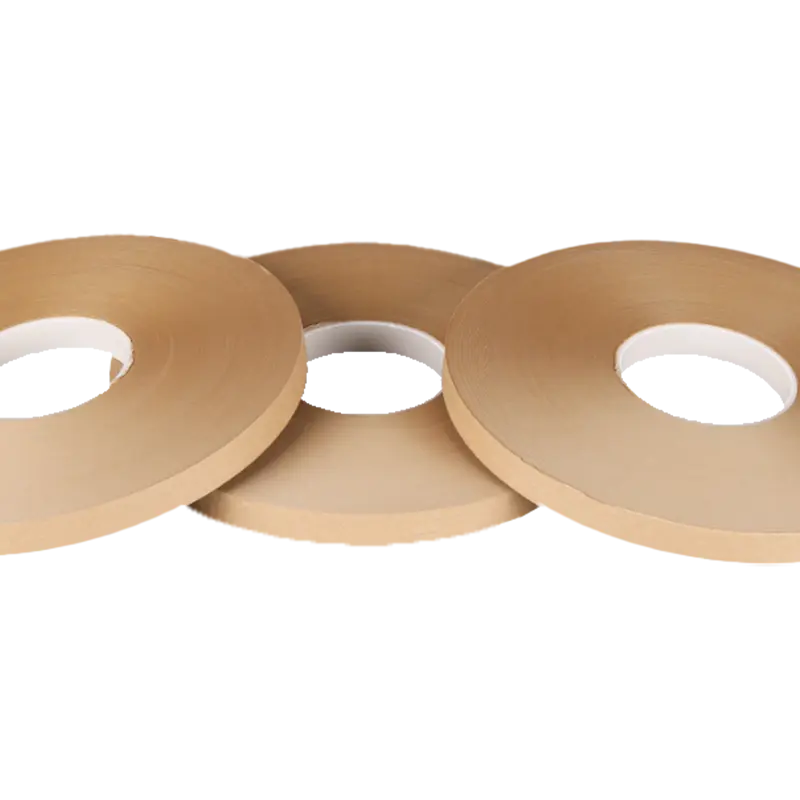
Role of Electrolytic Capacitor Paper in High-Frequency Performance: The Electrolytic Capacitor Paper serves as the dielectric spacer and a supporting structure for the electrolyte between the aluminum foils in an electrolytic capacitor. Its properties—such as thickness, porosity, fiber density, and chemical compatibility—directly influence the capacitance stability, equivalent series resistance (ESR), ripple current handling, and thermal performance. In high-frequency applications, including switch-mode power supplies (SMPS), inverters, and DC-DC converters, capacitors undergo rapid charge and discharge cycles. The capacitor paper must maintain its structural integrity and dielectric properties under these conditions, ensuring that the energy storage and release processes are efficient and that the voltage across the capacitor remains stable during rapid fluctuations. A high-quality paper with uniform fiber distribution allows for consistent electrolyte penetration and ionic movement, which is essential for reliable performance at high switching speeds.
Impact on Equivalent Series Resistance (ESR): ESR is a critical parameter in high-frequency power electronics because it determines the heat generated within the capacitor during rapid current fluctuations. The Electrolytic Capacitor Paper plays a major role in controlling ESR by influencing electrolyte distribution and ionic mobility within the dielectric structure. Papers with optimal porosity and precise fiber alignment facilitate uniform electrolyte absorption, enabling fast ion conduction and lower internal resistance. Reduced ESR minimizes energy loss during rapid switching cycles, reduces localized heating, and improves overall system efficiency. Capacitors with properly engineered paper can handle higher ripple currents without significant temperature rise, which is crucial for maintaining reliability in industrial, automotive, and consumer electronics applications where high-frequency load conditions are common.
Dielectric Stability at High Frequencies: High-frequency operation subjects the dielectric to rapid polarization and depolarization cycles. The Electrolytic Capacitor Paper must maintain chemical and mechanical stability under these repeated cycles to prevent capacitance drift or dielectric breakdown. Papers with uniform thickness, low impurity content, and consistent fiber density reduce localized stress points, minimizing dielectric losses and preventing hotspots. This ensures stable capacitance, low dissipation factor, and minimal phase shift in AC signals, which is critical for maintaining signal integrity, reducing electromagnetic interference (EMI), and ensuring consistent performance in sensitive power electronics circuits. Proper dielectric design also helps prevent micro-arcing or short-circuits that could occur under high-frequency voltage variations.
Ripple Current Handling: In high-frequency switching circuits, electrolytic capacitors experience significant ripple currents that generate internal heating due to ESR. The Electrolytic Capacitor Paper facilitates efficient ionic conduction within the electrolyte, allowing heat to dissipate evenly and preventing localized drying or degradation. Papers with high porosity and controlled fiber orientation ensure that the electrolyte remains distributed uniformly throughout the winding, enabling the capacitor to tolerate higher ripple currents without compromising performance. This property is especially important for long-term reliability in industrial, automotive, and renewable energy applications, where capacitors must sustain continuous high-frequency operation over thousands of hours.
Temperature and Thermal Management: High-frequency operation increases internal heat generation within the capacitor. The Electrolytic Capacitor Paper contributes to thermal management by maintaining uniform electrolyte distribution and minimizing hotspots. Papers with optimized porosity, high thermal stability, and consistent fiber structure allow the heat generated by rapid ion movement and ESR losses to dissipate efficiently, reducing the risk of thermal degradation or dielectric breakdown. This thermal stability ensures that the capacitor maintains its rated capacitance and voltage handling characteristics, even under prolonged high-frequency switching, which is essential for maintaining system reliability and extending capacitor lifespan.

Copyright © Wuxi Wanfeng Protective Film Co., Ltd. All Rights Reserved.
 English
 русский