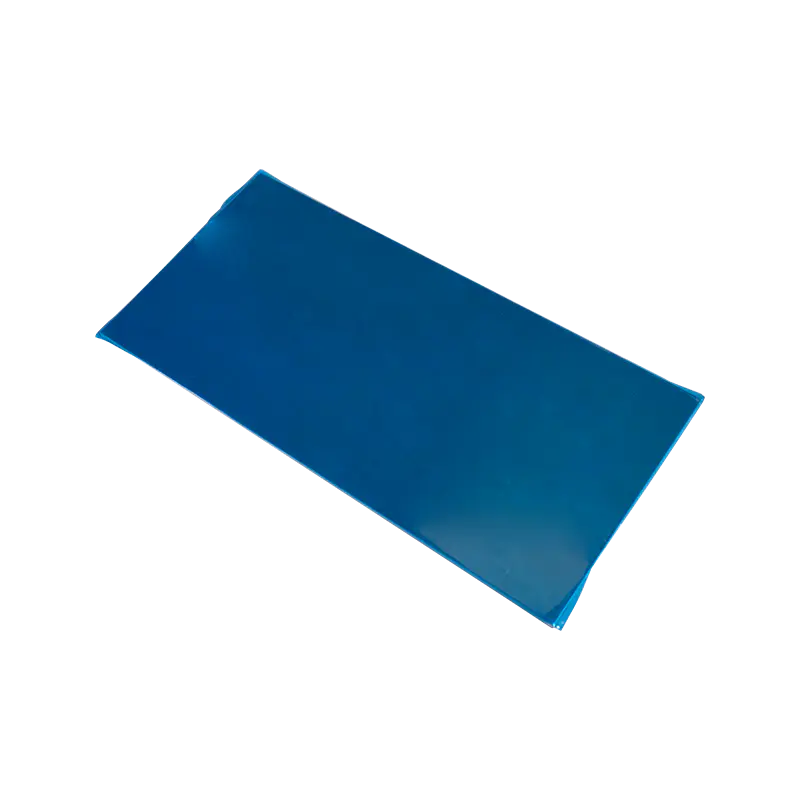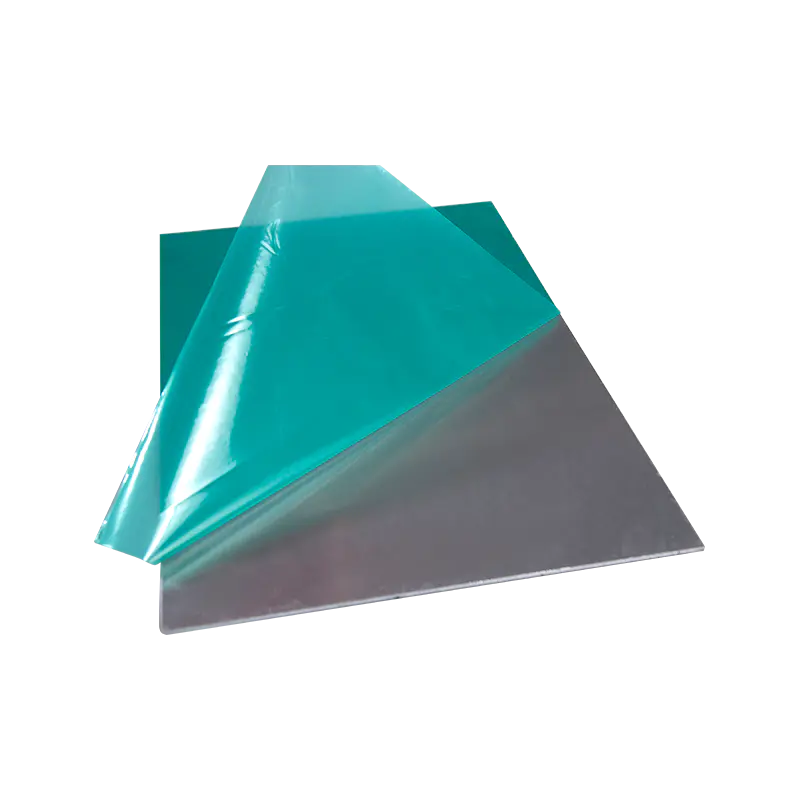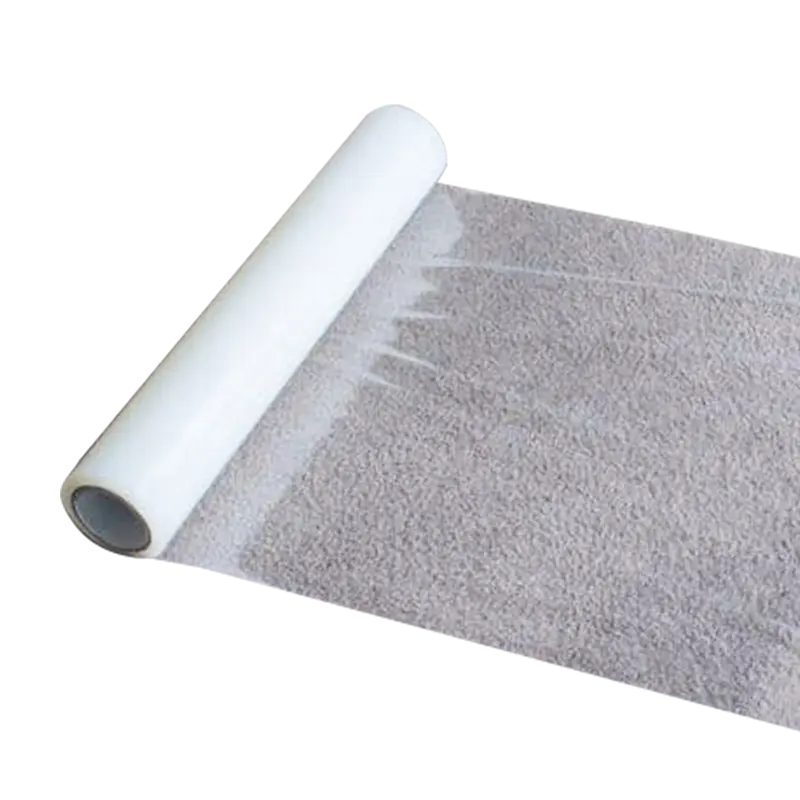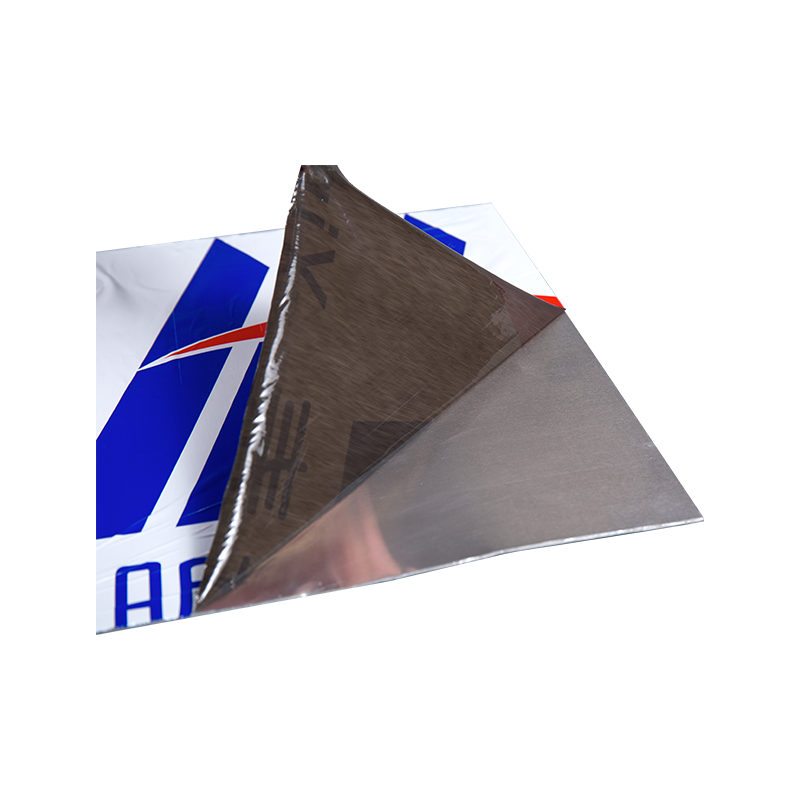
Peel a corner on one end of the sheet. If the film lifts with a light pull and a dry sound, the job takes twenty minutes. If it tears every 50 mm and drags a sticky thread behind it, the adhesive has aged, and the plan has to change before anything else touches the surface.
The short version: heat does the work that solvent is usually asked to do, patient peeling beats force, and a plastic scraper beats every metal tool on the shelf. Heat that runs too high, cleaners that are too aggressive, and abrasives used on a visible face are what turn a thirty-minute job into a rejected delivery.
The film on a stainless sheet is typically a 50 to 100 micron polyethylene layer carrying a pressure-sensitive acrylic adhesive. Fresh off the line, peel strength on a 2B finish sits somewhere between 100 and 300 g/25 mm. That number is not fixed. It climbs with time, temperature, and stacking pressure, because the adhesive keeps wetting out the steel underneath it.
Two mechanisms run in parallel. The adhesive flows slowly into the microscopic valleys of the surface, which increases contact area and grip. At the same time, tackifier resins oxidise and plasticisers migrate, so what remains after peeling is no longer the original adhesive but a harder, partly cross-linked residue that shrugs off soap and alcohol.
This is why film age matters more than technique. A six-month-old film on the same sheet peels cold in one piece. Two summers in a warm warehouse can push peel strength past 600 g/25 mm, and a cold winter makes the polyethylene brittle enough to snap instead of stretch.
Gather the basics: a heat gun or a hair dryer on its low setting, a stiff plastic scraper or a rounded hardwood wedge, lint-free cloths, isopropyl alcohol, a bucket of warm water with mild detergent, and a 100 mm length of PVC pipe or cardboard tube.
Keep surface temperature under 60 °C, and under 40 °C on mirror finishes. Stainless steel shows nothing at 80 °C, but the polyethylene above it begins to shrink, and a shrunken film edge behaves like a blade.
Lift 50 mm at the corner, wrap it around a cardboard tube or a short length of pipe, and let the tube gather the film as you walk along the sheet. A steady pull from a tube spreads the load. Hand pulling is intermittent, and an intermittent pull is what snaps an aged film into narrow ribbons.
Hold a heat gun on its lowest setting 200 to 300 mm from the surface and keep it moving. Aim for a surface temperature of 45 to 55 °C. Warm 300 mm, peel it, then warm the next section. Heating an entire sheet at once simply shrinks the remaining film into hard curls. Test with the back of your hand: if it is uncomfortable to touch, it is too hot.
Once the residue is warm and tacky, push it with a blunt plastic scraper held at 10 to 15 degrees to the surface. Light pressure, a shallow angle, and a fresh edge before the old one loads up.
Isopropyl alcohol lifts a thin, fresh smear. For residue that has hardened into something closer to plastic, move to a citrus-based remover or an aliphatic hydrocarbon such as mineral spirits, and test it on an inconspicuous corner first. Leave acetone and chlorinated solvents alone. Chlorides create a pitting risk on stainless steel, and acetone attacks lacquers and neighbouring painted parts.
The same film on the same sheet demands a different approach depending on what the steel looks like. Work from this table before you pick up a tool.
| Surface finish | Film age | Main risk | Recommended approach | Surface temp limit |
|---|---|---|---|---|
| 2B or BA | Under 12 months | Minimal | Hand peel with a take-up tube, no heat | Not required |
| 2B or BA | Over 24 months | Adhesive migrates into micro-texture | Warm to roughly 55 °C, tube-peel, finish with isopropyl alcohol | 60 °C |
| No. 4 brushed | Any | Cross-grain scratches from circular wiping | Plastic scraper along the grain, soften with solvent first | 50 °C |
| No. 8 mirror | Under 6 months | Any abrasive particle leaves a permanent mark | Hand peel only, no solvents, no heat | 30 °C |
| Embossed or blasted | Any | Film hooks into texture and tears before it releases | Soak in warm soapy water, soft plastic brush, avoid force | 45 °C |
Put the steel wool, the scouring pad, and every abrasive block back on the shelf. Each of them converts a brushed finish into a mirror patch in a single stroke, and a patch is far more visible than the residue it removed.
Soak, then wipe. Saturate a lint-free cloth with isopropyl alcohol or a citrus cleaner, lay it over the residue for two to five minutes, and push the softened adhesive off with your thumb through the cloth. On a brushed finish, always move along the grain. Circular wiping cuts across the texture and shows up immediately under side lighting.
Finish with warm water and mild detergent so no solvent remains on the steel. Solvent left behind attracts dust and dries into a bright smear that reads as a defect. Dry the sheet straight away rather than letting it air dry.
Late afternoon beats noon for this work. A sheet in direct sun can reach 60 °C on its own, which makes any solvent evaporate before it has time to act.
A sheet that has spent two summers in a stack does not need a stronger chemical. It needs fifteen minutes of gentle heat and a roll of patience.
A pallet of sheets covered in cured adhesive is not an hour of labour. It is repolishing, rescheduling, and a quality claim if the customer is the one who finds it. Most of that cost is decided when the film is specified, not when it is removed.
When you are choosing a protective film for stainless steel, check the peel grade against the finish it will sit on, and confirm that the supplier tests adhesion on the same alloy and surface you run. A film that is right for a 2B coil can be the wrong film for a mirror sheet, and the difference only becomes obvious on removal day.
If a corner test strip releases cleanly within 60 seconds, the rest of the stack will follow without drama. If it will not, budget ten to fifteen extra minutes per sheet and plan the job for a cool part of the day.
Old film does come off, but it comes off on the material's terms. Warm the adhesive gently, peel with a tube rather than a fist, and soak the residue instead of scrubbing it. The film was never the hard part. The hardened glue underneath it was, along with a surface that cannot be repaired once the grain has been cut across it.

Copyright © Wuxi Wanfeng Protective Film Co., Ltd. All Rights Reserved.
 English
 русский