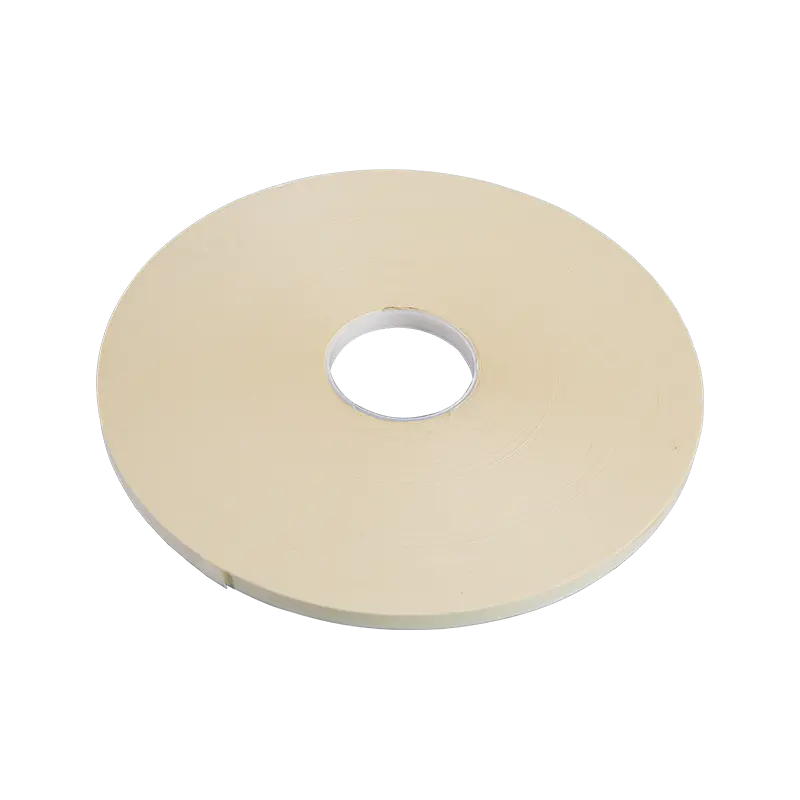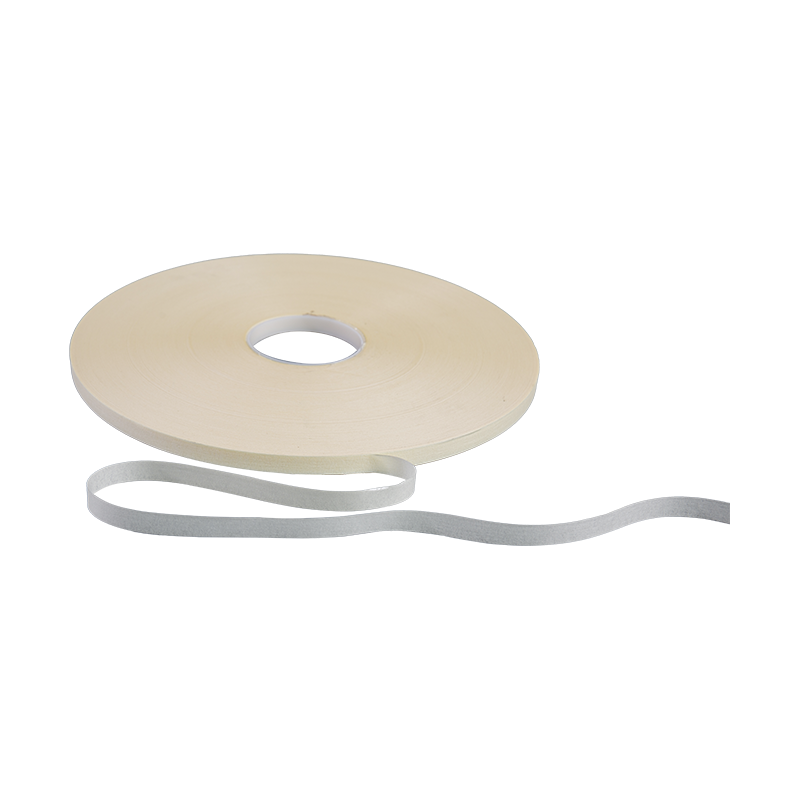
The conclusion up front: when activation temperature, coating weight, and storage conditions are matched to the substrate and the line, this tape delivers one of the most reliable thin-line bonds in converting and textile work. When those variables are ignored, the same grade produces joints that fail after days, edges that bleed adhesive, and rolls that block on the shelf.
Most field problems trace back to three causes: heat that never reaches the bond line, adhesive coverage that varies roll to roll, and warmth or humidity that damaged the tape before it was opened. Each one is preventable once you know what to ask for.
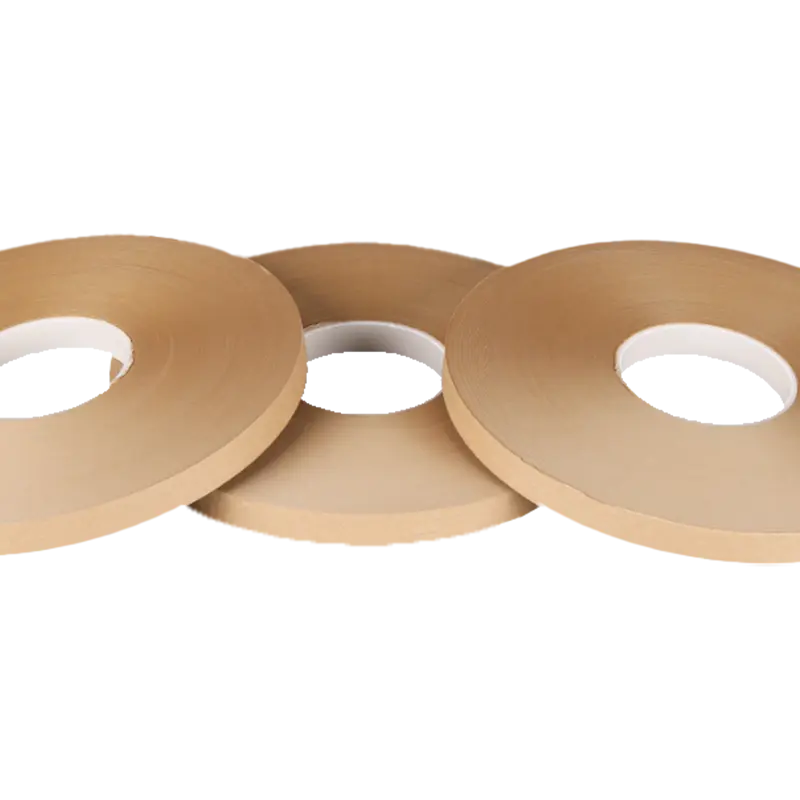
“Tissue” describes the carrier: a lightweight paper-like web, usually 20 to 60 microns thick, coated on both faces with a thermoplastic hot melt adhesive and protected by a release liner. The carrier provides the low profile and conformability; the adhesive provides the bond.
The “hot melt” part matters even more. Unlike pressure-sensitive tape, which stays tacky at room temperature, hot melt adhesive is solid at rest and softens only when heated. Before heat is applied, the tape can be positioned and repositioned freely. Once heat and pressure arrive, the adhesive flows into the surface and locks the materials together.
These properties make the tape a natural fit for fabrics, tissue, film, nonwovens, and thin flexible assemblies — applications where a thicker construction would show through or slow down the heat the bond depends on.
Bonding follows a dependable sequence. Heat raises the adhesive above its softening point — commonly 90 to 120 °C for EVA-based hot melts — viscosity drops, and the adhesive wets the substrate. Pressure pushes it into the surface’s microscopic valleys. As the joint cools, the adhesive solidifies and gains cohesive strength. The finished bond beats pressure-sensitive adhesives at elevated temperature because the holding force comes from a solidified layer, not tack.
Most failures are not the adhesive’s fault. The tape’s activation temperature is a property of the adhesive; the temperature at the bond line is a property of the process. A platen at 120 °C pressed for one second against a cold, conductive substrate will not bring the bond line up to temperature. Dwell time, pressure, and substrate heat transfer are just as decisive.
Do not compensate for a weak bond by raising the temperature arbitrarily. Above roughly 200 °C, hot melt adhesives degrade and may release fumes, while the tissue carrier can scorch. Stay inside the activation window the supplier provides.
| Parameter | What to verify | What goes wrong when it is ignored |
|---|---|---|
| Carrier thickness | Uniform caliper in the 20–60 µm range | Thick spots show through; thin spots hurt handling |
| Coating weight | Grams per square metre per side, e.g., 30–60 g/m² | Uneven coverage creates inconsistent peel strength |
| Activation temperature | Softening point and full-bond window | Too low: no bond; too high: scorching and bleed |
| Peel and shear performance | Values after 24 h conditioning at use temperature | The joint creeps or peels under load |
| Residue behaviour | Permanent or removable grade | Adhesive transfer damages parts on removal |
The same tape logic appears across a wide range of industries, wherever the substrate is thin, the joint must stay low-profile, and heat is available in the process:
A tissue carrier is not a downgrade from a film carrier. It is the right engineering answer when a joint has to be thin, invisible, and flexible — and still hold for years.
Buyers who ask precise questions at the sales stage avoid expensive surprises in production. These five questions separate a reliable supplier from a trader:
Ask for coating weight per side and the activation window as standard documentation. A supplier who cannot state those two numbers can sell you a roll, but not a repeatable process.
Hot melt adhesives are thermoplastics: they soften when warm. That single fact explains most adhesive failures blamed on the tape. A roll left near a sunny window, above an oven, or in a hot container can develop edge flow, liner blocking, or telescoping. The chemistry has not changed — the tape was shaped by the wrong environment.
The tissue carrier adds a second sensitivity: humidity. Moisture changes the carrier’s dimensions and curl, which shows up as misregistration in die-cutting or a wavy appearance in laminated panels.
Do not try to rescue a blocked roll by increasing unwind tension. Once the liner has locked to the adhesive, the roll is unusable for precision processes — web breaks, puckering, and adhesive pick-off will follow no matter how carefully you handle it.
The difference between a trouble-free roll and a problematic one is rarely visible. It lives in coating weight tolerances, raw-material selection, and process consistency. Experienced buyers audit the production line, not just the datasheet. A manufacturer with its own coating equipment can control incoming materials, adjust formulations, and hold batch-to-batch uniformity in a way traders cannot.
Wanfeng has manufactured films and tapes since 1989, running dedicated tape lines with automated slitting for industrial customers. The hot melt tape grade used in textile, foam, and electronic bonding comes from that programme.
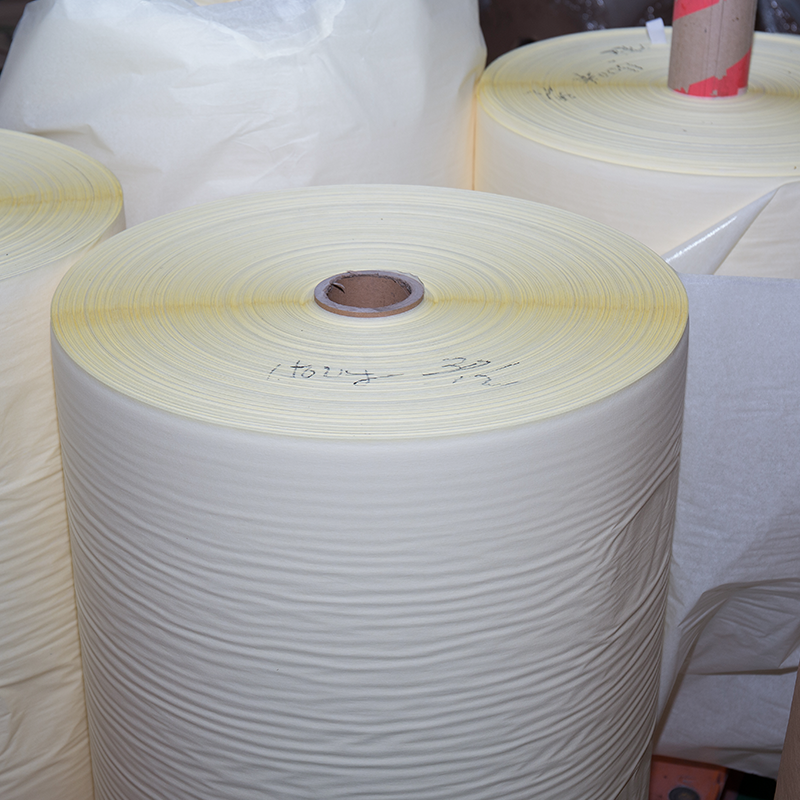 Hot Melt Tape from Wanfeng for Industrial BondingThis hot melt tape, made with masking paper and natural latex, suits electronic component assembly and textile or foam bonding, reflecting Wanfeng's long-standing adhesive manufacturing expertise.View Product →
The same discipline carries through the wider adhesive tape range. When the right grade meets the right process, hot melt double sided tissue tape becomes exactly what it should be: quiet, reliable, and repeatable.
The tape itself is simple; the engineering around it is not. A genuine manufacturer treats coating weight, activation temperature, and storage conditions as data points, so the first roll and the fiftieth behave the same.
A three-step trial settles most supplier decisions: press a test patch at the documented activation temperature, run one production roll through the line, and check peel strength and residue after 48 hours. Pass those gates, and you have a grade you can build a process around.

Copyright © Wuxi Wanfeng Protective Film Co., Ltd. All Rights Reserved.
 English
 русский