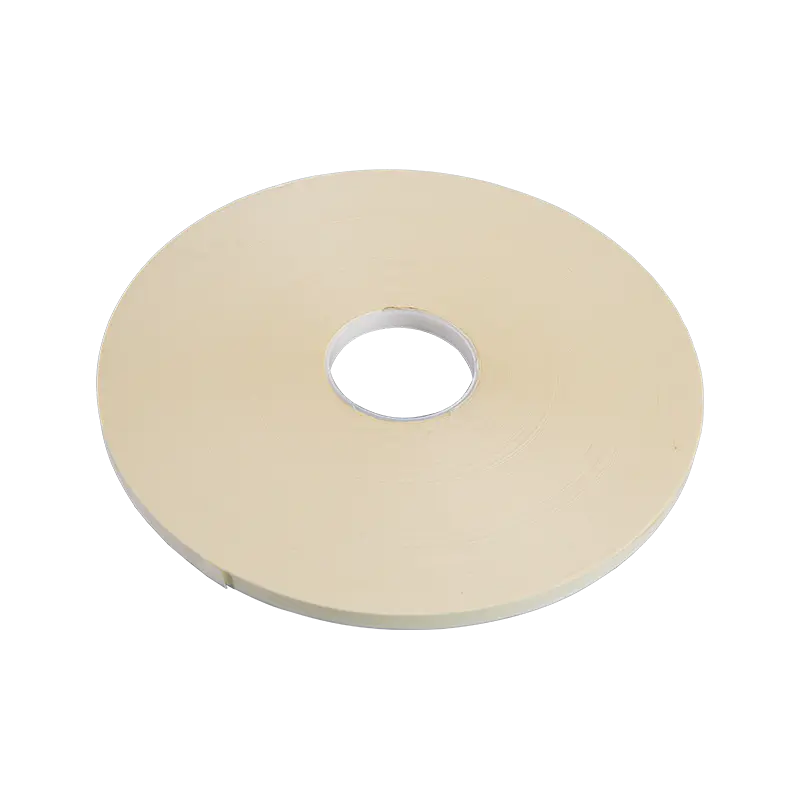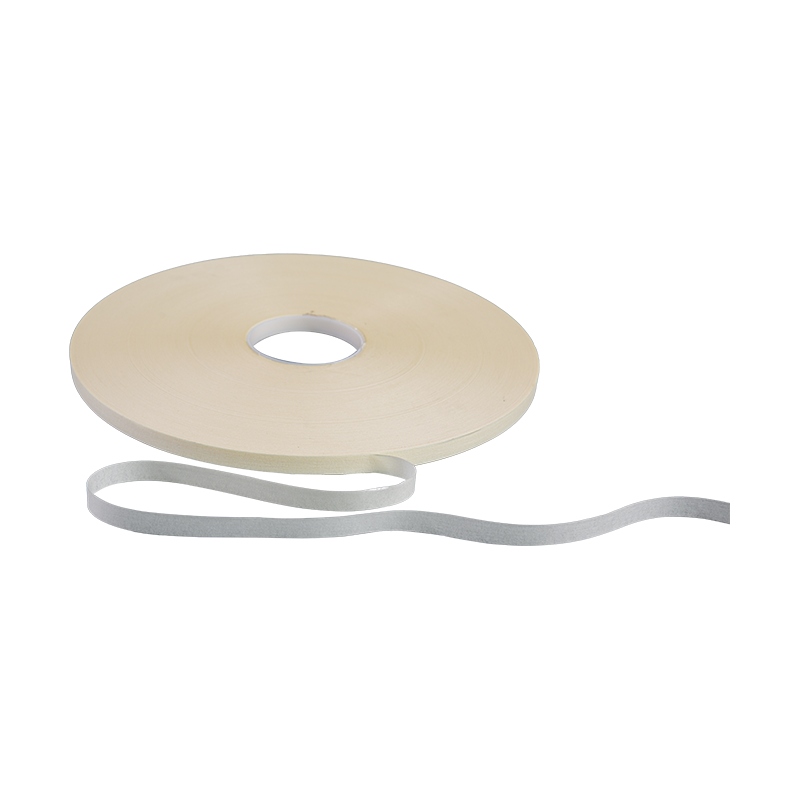
Hot melt tape rarely fails on its own. It fails on pressure, temperature and dust, three variables you control in the first ten seconds of every seal.
Start with the conclusion. A hot melt seal holds when four conditions are met at the same time: firm roller pressure, a dry and dust-free board, a room above roughly 10 C, and a roll stored below 25 C and used within a year of production. Meet them and the adhesive does the rest. Miss them and no thickness, coating weight or price will rescue the seal, because corners lift overnight and flaps pop somewhere between the loading dock and the customer.
What follows is the method behind those four conditions: how the adhesive behaves, how to prepare the board, how to apply the tape, how to store the rolls, and how to test a single seal before committing a pallet to it.
Worth knowing first: a hand-pulled seal that is never pressed reaches a fraction of the tape's rated bond strength. Most weak-tape complaints are really no-roller complaints.
Hot melt adhesive is applied to the backing film in a molten state and cooled into a tacky rubber-resin layer. It remains a pressure-sensitive tape; it simply grabs faster and ages sooner than acrylic carton tape. The adhesive layer is thicker and softer, which is why hot melt feels grippier on contact and will seal a dusty recycled box that leaves acrylic tape struggling.
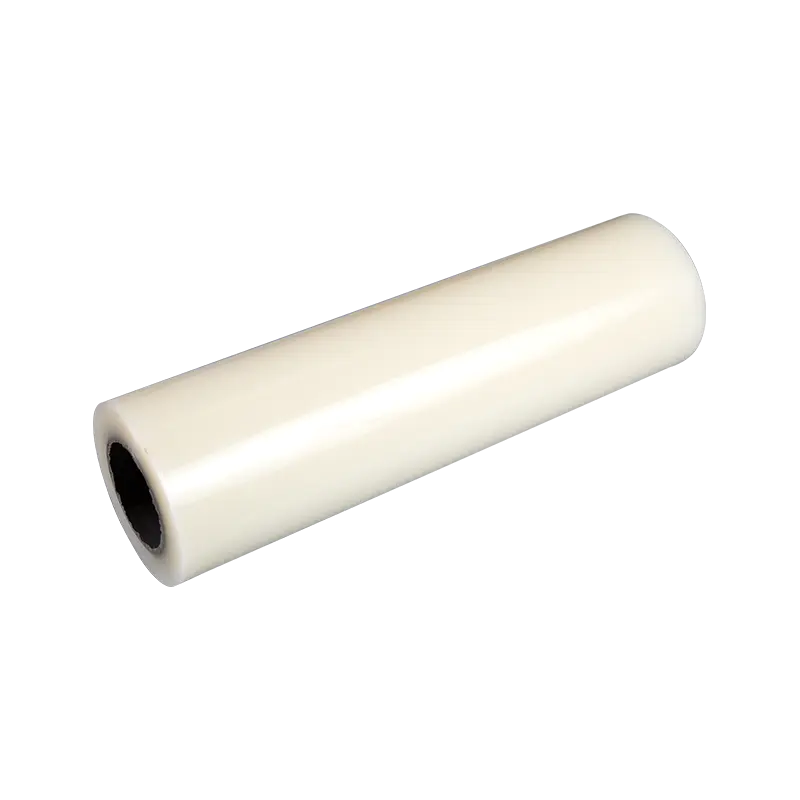
A typical carton sealing construction is a 40 to 50 micron BOPP film carrying 20 to 28 microns of hot melt adhesive on a 76 mm core. Specify film thickness, adhesive coat weight, total calliper and roll length as separate numbers. A label reading 48 mm x 100 m describes the format, not the performance.
If you want the chemistry in more depth, this note on how hot melt tape differs from other pressure-sensitive constructions covers the adhesive system itself.
| Property | Hot melt tape | Acrylic tape |
|---|---|---|
| Adhesive base | Synthetic rubber and resin, applied molten | Water-based or solvent acrylic |
| Initial tack | High, grips within about a second | Moderate, needs pressure and time |
| Cold performance | Serviceable to roughly -20 C once bonded | Becomes glassy near 0 C |
| Heat resistance | Creeps above about 50 to 60 C | Stable well above 60 C |
| UV and ageing | Yellows and oxidises outdoors | Better long-term light resistance |
| Dusty recycled board | Tolerant | Struggles without extra pressure |
Adhesive performance is decided by the surface it meets. Four checks take under a minute and remove most of the variability from a sealing line.
Tape does not bond to a board. It bonds to whatever is sitting on that board: dust, moisture, oil or release agent.
The application itself takes seconds. Doing it in the same order every time is what makes a pallet predictable.
On a dispenser, three settings carry most of the result: tape tension high enough to lay flat but never enough to narrow the tape, roller pressure high enough to widen the adhesive line slightly, and two to three seconds of flap compression after sealing. If line speed rises, roller pressure has to rise with it.
Hot melt tape is a perishable good with a quiet failure mode. It leaves the warehouse looking fine and behaves badly on the dispenser. Store rolls between 15 C and 25 C, out of direct sunlight, in the original wrap, and never directly on a bare concrete floor. Rotate stock first in, first out, and treat twelve months from the production date as the working shelf life.
Keep heat away from stock. A roll stored near a heater or in a container that reaches 40 C can ooze adhesive at the edges, telescope on the dispenser and feed unevenly for the rest of its life.
Humidity is often blamed unfairly. Hot melt adhesive contains no water and no solvent, so humid air is not the enemy; condensation forming on a cold board is. Bringing tape and board to room temperature before sealing solves a problem that changing tape never will.
Most sealing faults repeat across plants, packaging types and climates. Reading the symptom correctly saves a tape change that would not have helped.
| Symptom | Likely cause | Fix |
|---|---|---|
| Corners lift within an hour | Flap spring-back, or almost no roller pressure | Hold flaps under compression for 2 to 3 seconds and raise roller pressure |
| Zipper tear down the centre | Dull or misaligned blade | Replace the blade and re-check tape centring |
| Seal pops on a filled carton | Overfilled box pressing the flaps apart | Reduce fill height or add strapping |
| Roll telescopes off the core | Dropped roll, or unwind brake too loose | Set the brake and discard damaged rolls |
| Weak grab on recycled board | Dust on the flap, or a cold room | Clean the flap and bring the room above 10 C |
| Adhesive bleed at roll edges | Storage above about 30 C | Move stock to a 15 to 25 C area and rotate it |
Hot melt tape has two hard limits: sustained heat and ultraviolet light. If a sealed carton sits in direct sun for months, passes through a shrink tunnel, or is stored where summer temperatures pass 50 C, the rubber-resin adhesive softens and creeps. Choosing it there is not a saving, just a postponed failure.
In electronics and process manufacturing, heat exposure is measured in minutes rather than seasons, and the requirement shifts to a film tape that survives soldering and reflow masking without leaving residue. That is a different product family, specified by temperature rating rather than by width.
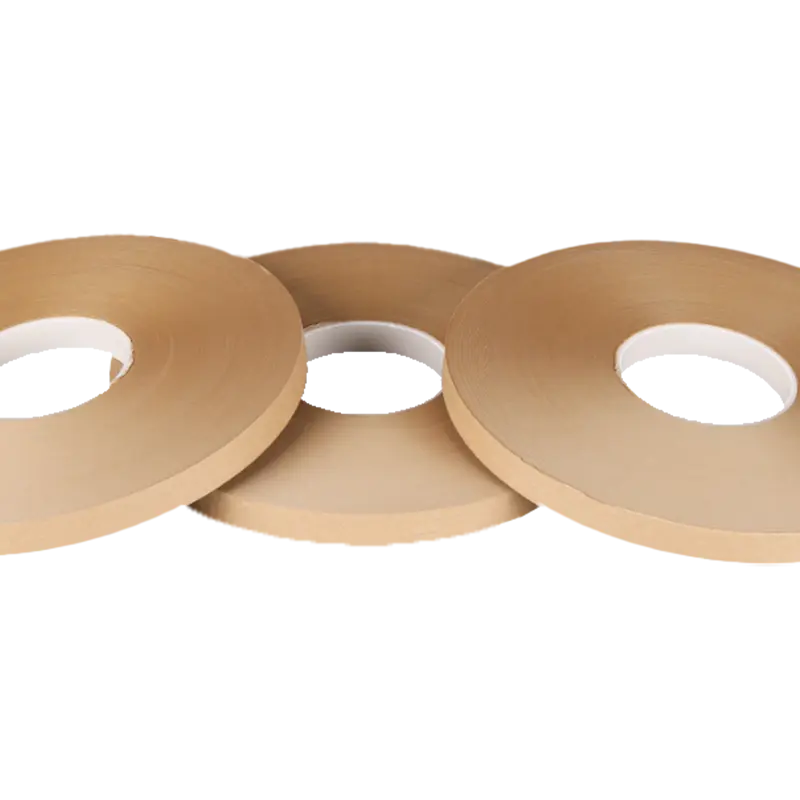
For reinforced double-wall cartons, bundles and splicing work, a cold-pressed kraft tape with a cowhide-textured face often suits better. It brings higher tensile strength against a plastic backing, and it appeals to buyers who want to reduce the plastic share of a packaging line.
Bench testing takes ten minutes and settles arguments that otherwise run for weeks. Seal three cartons with the intended tape and settings, then run the same checks.
Pass criteria: fibre tear across at least 80% of the peeled area, no corner lift after the heat hold, and flaps still aligned after the drop test. If a check fails, change one variable at a time: pressure first, then surface, then tape specification.
Do not lift a carton by the sealed flap. Hot melt tape is strong in shear and weak in peel, so a 25 kg case carried by the seam can open mid-lift. Tape closes a box; it does not carry it.
Using hot melt tape well is specific rather than complicated. Buy by construction instead of by label, keep rolls between 15 C and 25 C, seal dry board in a room above 10 C, apply one continuous pass with genuine roller pressure, and confirm the result with a peel test before the pallet leaves the floor.
Do that and hot melt tape delivers what it is known for: instant grab on recycled board, dependable performance in the cold, and high sealing speed at a sensible cost per case. Skip it and the same tape becomes the most expensive item in the shipment, the one that opens in transit.

Copyright © Wuxi Wanfeng Protective Film Co., Ltd. All Rights Reserved.
 English
 русский